A stripped-down ‘Streetcar’ at ACT
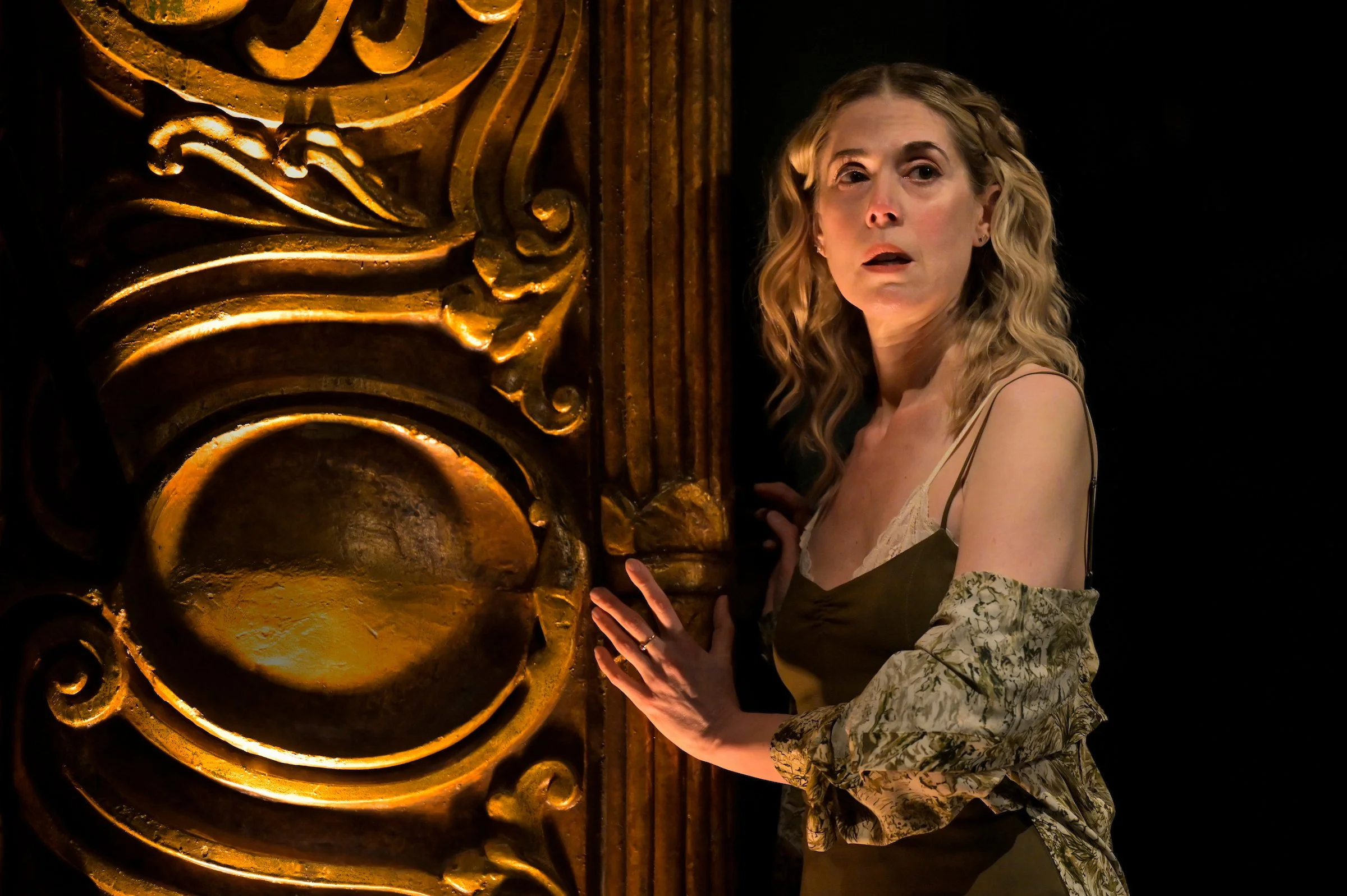
Lucy Owen is Blanche DuBois in The Streetcar Project’s production of A Streetcar Named Desire, at ACT’s Toni Rembe Theater through Feb. 1. Photo by Kevin Berne
Strip it down and what have you got? A revitalized American classic
That’s a simple take on The Streetcar Project’s approach to Tennessee Williams’ A Streetcar Named Desire, a play so celebrated, so famous we feel like we’ve seen it dozens of times even if we’ve really only seen the movie. Co-created by Nick Westrate and Lucy Owen, this production removes all expectations of a Production! (capital P) by focusing almost entirely on Williams’ words. With only four cast members, the show has no set or props beyond the use of a few chairs and a candle, and the costumes are basic contemporary clothes. There’s an almost constant soundscape filled with music (listen for “Softly, As in a Morning Sunrise,” “It’s Only a Paper Moon” and “Goodbye”), but the real music is in Williams’ words.
Over the last few years, this Streetcar, which includes all of the text but none of the frills, has been performed in non-traditional spaces like airplane hangars, barns, churches and the like. Now, for the first time, this version is being done in a theater, and gloriously gilded theater at that: American Conservatory Theater’s Toni Rembe Theater. To accommodate such an intimate production in such a large space, the second balcony has been closed off, as have the back few rows in the orchestra. And there are six rows of of chairs surrounding the performance space on the stage. I say performance space meaning the center area where much of the action takes place, but the actors roam all about – through the orchestra and the wings and places where they can be heard but not seen.
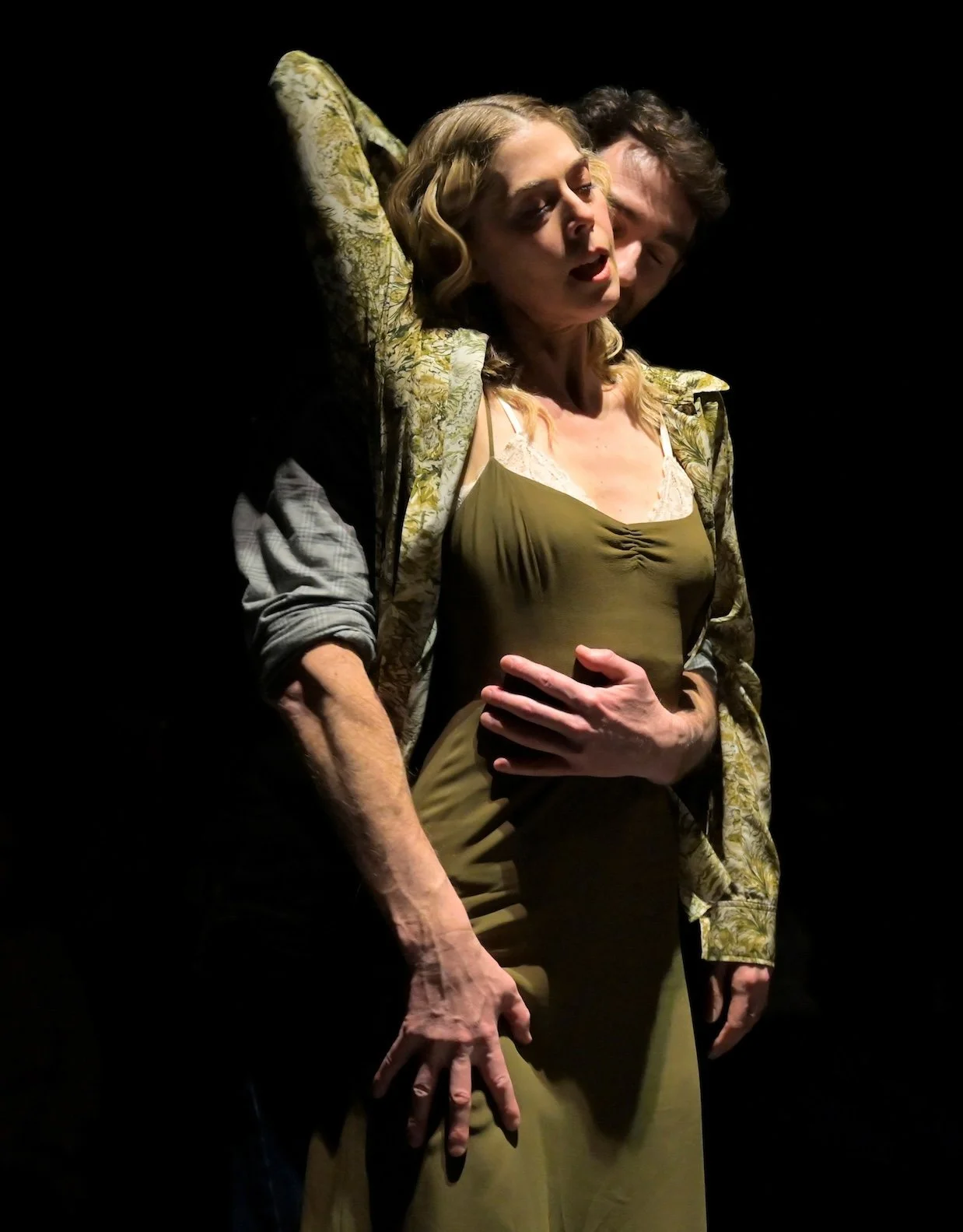
James Russell is Mitch and Owen is Blanche. Photo by Kevin Berne
I was seated on the stage and at various points through the show’s nearly three hours, I can say I looked into the eyes of each actor. Blanche DuBois even brushed my shoulder in passing. And I feel like I was reintroduced to Streetcar as a beautiful piece of writing that sits on the Tennessee Williams scale of lyrical/dream to torrid/reality (think Glass Menagerie to Cat on a Hot Tin Roof) that still packs a wallop.
Because the actors are using the space in what feels like a casual, expansive way (but with some decisive lighting), there’s a sense of an acting exercise unfolding with a text these actors – under Westrate’s direction – know and feel on a subterranean level. They have been compared to a jam band working ever more deeply into a favorite tune, and that’s how it starts.
Owen, who plays Blanche, is the central force of this quartet. She does not affect a flowery Southern accent, and is in a constant swirl. She is, by turns, perceptive, intelligent, world weary, damaged, deluded, sexual, funny, anxious, loving, evasive, grounded, desperate and untethered. She is a constant fascination – someone you want to help and someone you want to be wary of. The empathy is significant, but so are the red flags.
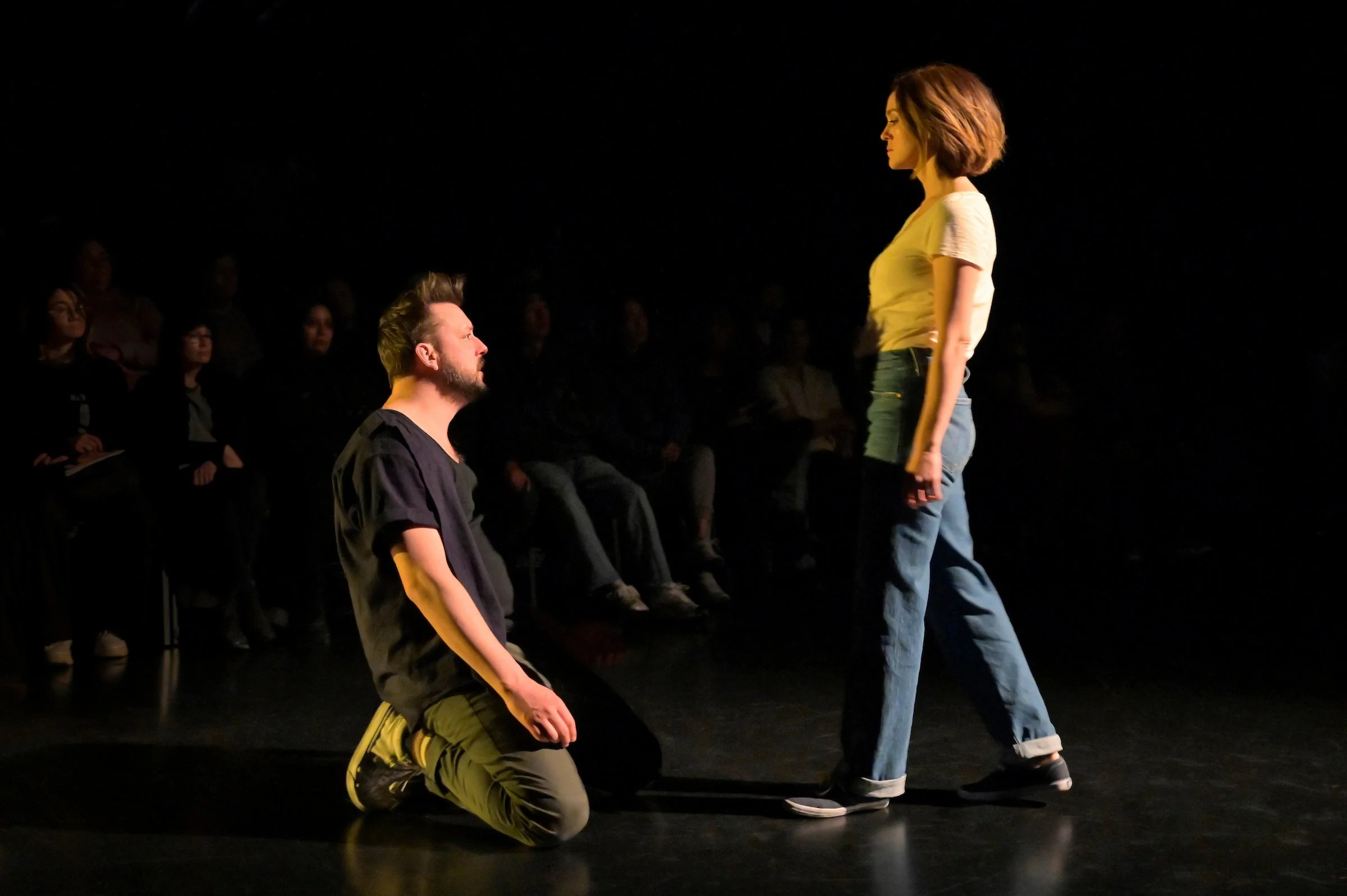
Brad Koed is Stanley Kowalski and Heather Lind is Stella DuBois Kowalski. Photo by Kevin Berne
We find Blanche at the end of a rough road, degraded and alone in the world except for her sister, Stella (the fascinating Heather Lind), who seems to have fled as far she could from the crumbling family manse in Mississippi. She made it to New Orleans, where she is making a life with her husband, Stanley (Brad Koed), a brutish traveling salesman who pushes factory parts as often as he unleashes his raging temper.
Though Stella makes a show of welcoming her wilting sister, the affection feels strained and forced. The dingy Kowalski apartment is small, and Stanley is not at all happy to meet his storied sister-in-law, with all her airs and affectations, which he doesn’t buy for a second. He’s mad from the get-go because he thinks Blanche has deprived the Kowalskis of money earned from the sale of the family plantation. When Blanche says the home was not so much as sold but lost, Stanley curls into the human embodiment of a leering sneer.
Into this family drama comes a spark of hope for Blanche in the form of Mitch (James Russell), a single man and dedicated mama’s boy on the verge of losing his sickly mother. But hope flickers and fades. There won’t be any happy endings for anyone, really, because everybody loses, compromises, suffers or simply stops fighting. It’s a sad, heavy story, and though Stanley is villainous, he doesn’t come across here as a total monster. And Blanche isn’t the victim you might remember. She displays shrewdness and vulnerability in equal measure.
These commanding actors make their characters feel like real people, so issues of youth, mortality, privilege, abuse, love and loss carry the weight of real stakes and not just things people in plays chatter about. It’s all there in their voices, faces and bodies.
The only time the economy of this production felt limiting was at the end when it seems like everyone but Blanche is playing someone else, and if the intention was to make the stage (suddenly filled with fog and light) feel like Blanche’s fever dream, it ended up as muddled and confusing. Blanche says she prefers magic to realism, but this ending offers neither.
Up until then, however, this Streetcar is not only on track, it’s a revelation.
FOR MORE INFORMATION
Tennessee Williams’ A Streetcar Named Desire continues through Feb. 1 at American Conservatory Theater’s Toni Rembe Theater, 415 Geary St., San Francisco. Running time: 2 hours and 50 minutes (including intermission). Tickets are $25-$130 (subject to change.) Call 415-749-2228 or visit www.act-sf.org.