EXTENDED THROUGH DEC. 30!

Tony Award-winning director Mary Zimmerman returns to Berkeley Rep for the world-premiere production of The White Snake, which stars Amy Kim Waschke (left) and Christopher Livingston. Below: Tanya Thai McBride is the Green Snake, better known as Greenie. Photos courtesy of mellopix.com
Even celebrated ophidiophobe Indiana Jones would fall in love with the stunning serpents at the heart of Mary Zimmerman’s The White Snake, a poignant, colorful tale from ancient China that arrives at Berkeley Repertory Theatre like a giant holiday gift just waiting to be unwrapped and savored by audiences.
This is Zimmerman’s seventh show at Berkeley Rep, following in the wake of such stunners as Metamorphoses, The Notebooks of Leonardo da Vinci and, most recently, The Arabian Nights. Like these previous outings, The White Snake is theatrical storytelling at its very best, a fusion of stunning imagery, captivating music and, best of all, characters whose stories cut straight to the heart.
A co-production with the Oregon Shakespeare Festival, this Snake plays out on a mostly bare stage of bamboo flooring and two bamboo walls coming up on the sides (the set is by longtime Zimmerman collaborator Daniel Ostling). The back wall is a changing canvas of sumptuous projections by Shawn Sagady, often evoking Chinese watercolors and adding depth and lighting effects to the already stunning work of designer T.J. Gerckens.
From its earliest moments, Zimmerman’s script establishes a tone that is at once formal and serious in its storytelling and full of humor and contemporary connectors. We are told of the legend of the White Snake, a centuries-old spirit that lives high on a mountain. White Snake has studied the Tao so assiduously that she is able to practice a sort of magic, including the trick of being able to turn herself into a beautiful woman (Amy Kim Waschke. But there’s something restless about White Snake, and that restlessness has kept her from total transcendence.
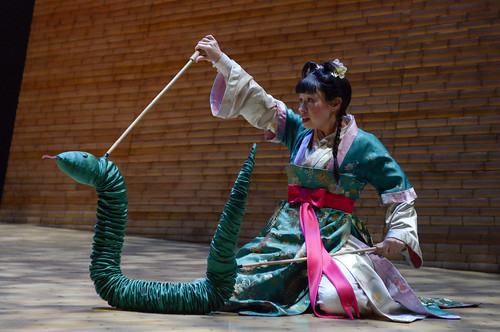
Spurred on by her friend Green Snake (Tanya Thai McBride), White Snake agrees that, as a lark, the two spirits should descend from their mountain home and cavort with humans in the mortal world.
Once among people, White Snake immediately falls in love with a common young man (who is uncommonly sweet) named Xu Xian (Christopher Livingston), and the way Zimmerman introduces this love story is indicative of how fun and rich her story is. As a side note, we’re told that in some versions of the White Snake story, the connection between Xu Xian and White Snake goes back to previous lives in which the young man spared the life of the snake. This destined them to fall in love somewhere along the continuum. These kinds of details, along with interludes in which we learn the formalities of Chinese drama, are great fun.
The love story of Xu Xian and White Snake, aided and abetted by the feisty and loyal Green Snake, or Greenie as she’s known, leads to marriage and a family. But the course of true love never did slither smoothly.
An egomaniacal Buddhist monk, Fa Hai (Jack Willis) senses the presence of a demon spirit and deduces that the pharmacist’s wife with the incredible power to heal must be the White Snake. So Mr. Monk makes it his mission to destroy the marriage and send White Snake back where she belongs.
Battles are fought, people are kidnapped, storms rage, characters die, and it’s all just gorgeous and beautiful and utterly enchanting. The original score by Andre Pluess evokes the sound and feel of China, but the music, so beautifully played by Tessa Brinckman (flute), Ronnie Malley (strings/percussion) and Michal Palzewicz (cello), is thrilling and moving in its own right. And the costumes by Mara Blumenfeld are just a feast of color and clever little touches (notice the red snakes trimming the white robes worn by White Snake).
Even though this one-act play is only an hour and 40 minutes, it has the feel of an epic adventure and an intimate love story. You don’t want to emerge from the spell cast by this tale, but there’s no denying that the ending, both sweet and sad, is just about perfect.
[bonus interview]
I talked to director Mary Zimmerman about the creation of The White Snake for a feature in the San Francisco Chronicle. Read the story here.
FOR MORE INFORMATION
Mary Zimmerman’s The White Snake continues an extended run through Dec. 30 at Berkeley Repertory Theatre’s Roda Theatre, 2015 Addison St., Berkeley. Tickets are $29-$99 (subject to change). Call 510-647-2949 or visit www.berkeleyrep.org.



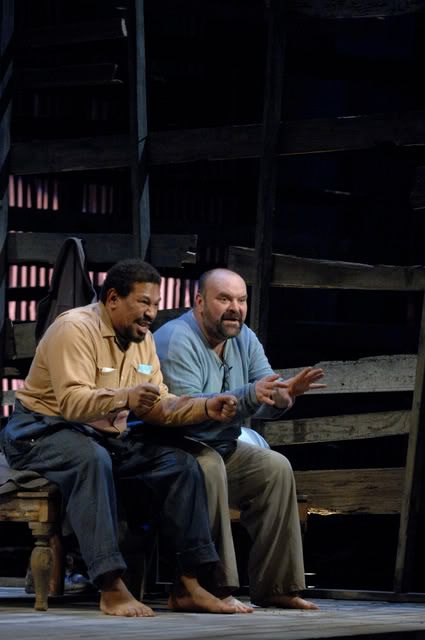
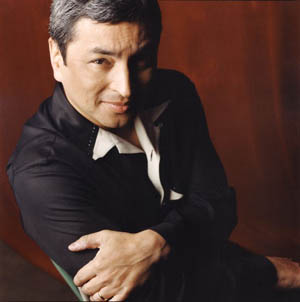 And one of the recipients was Berkeley-based California Shakespeare Theater, which will spend 20 grand on early play development activities — read-throughs, public readings and workshop productions — for Pastures of Heaven, which is being written by San Francisco’s Octavio Solis (right), based on a collection of interlinking short stories by John Steinbeck. The piece is being developed with San Francisco’s Word for Word Performing Arts Company.
 Eleven top regional theatre actors from around the country have been selected as the inaugural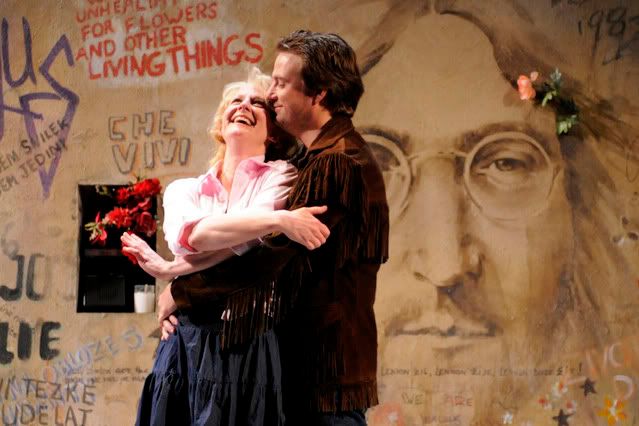
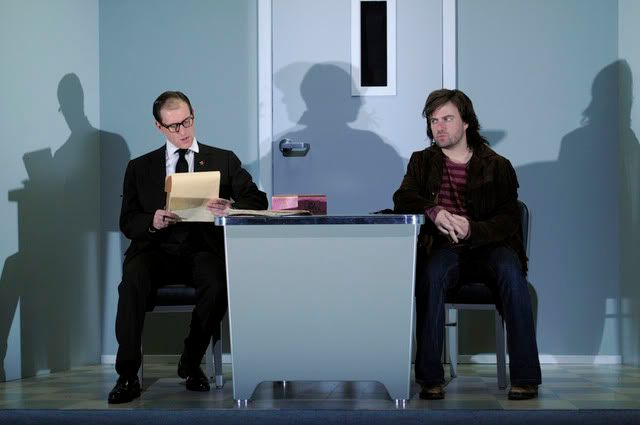

 The production, which will bow in the 2009-10 season, will star 17-year Stratford veteran Seana McKenna in the title role.